Skills Intelligence
for Enterprise

A flexible system that turns fragmented skill ratings into one clear, consistent view.

Enterprise skills product interface shown across a laptop and tablet
Role
Lead product designer
Team
Cross-functional team of four
Scope
End-to-end product design
Platform
Enterprise web app

The problem

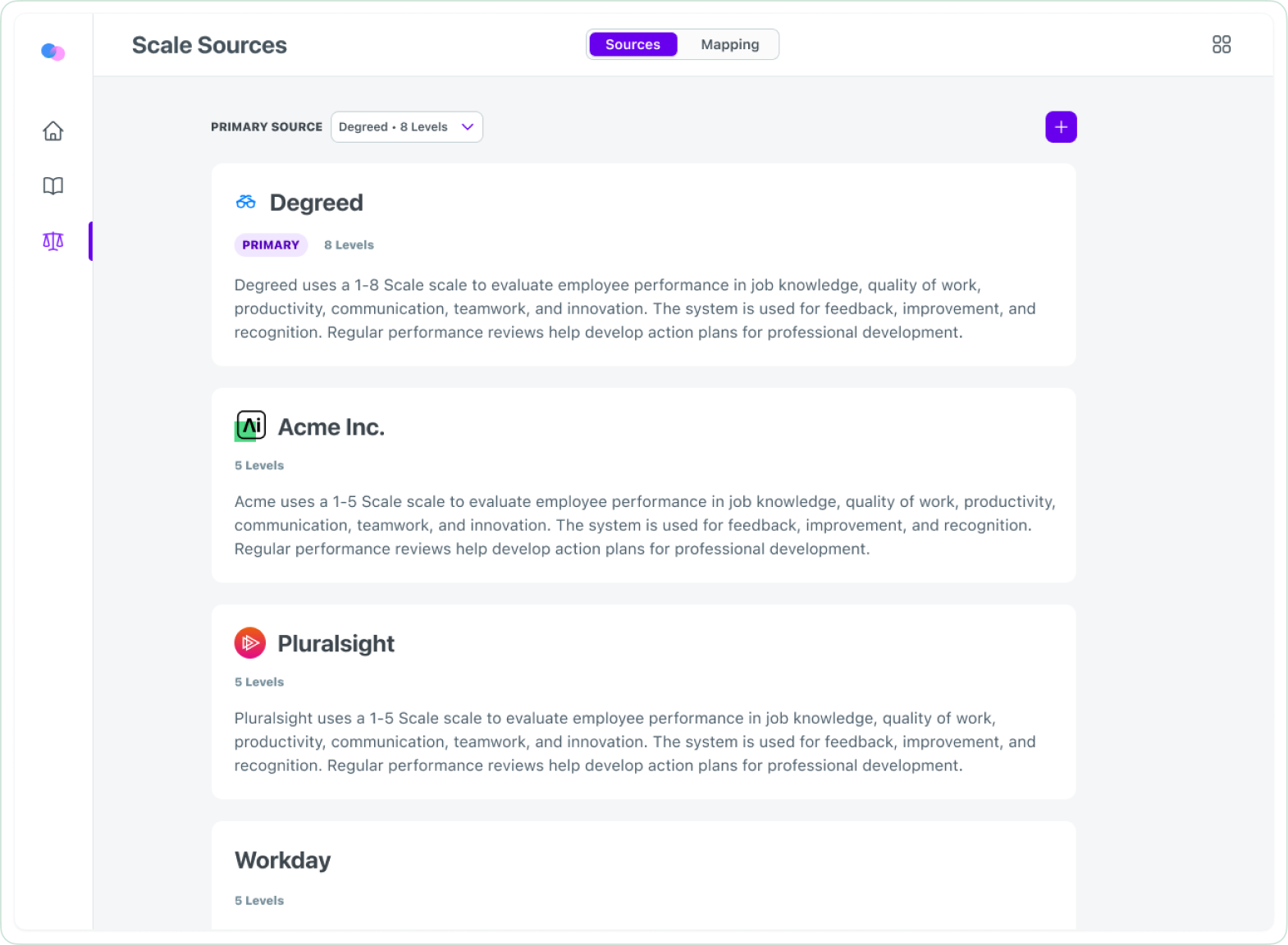
Large enterprise clients at Degreed — including Bank of America, Citi, and Unilever — use multiple platforms to measure employee skills. Each has its own rating scale, level names, and requirements.

This made it complicated and time-consuming for admins to understand an employee’s true skill level. It created confusion for learners too: the same skill could look different in every system, with no clear way to compare or combine the results.
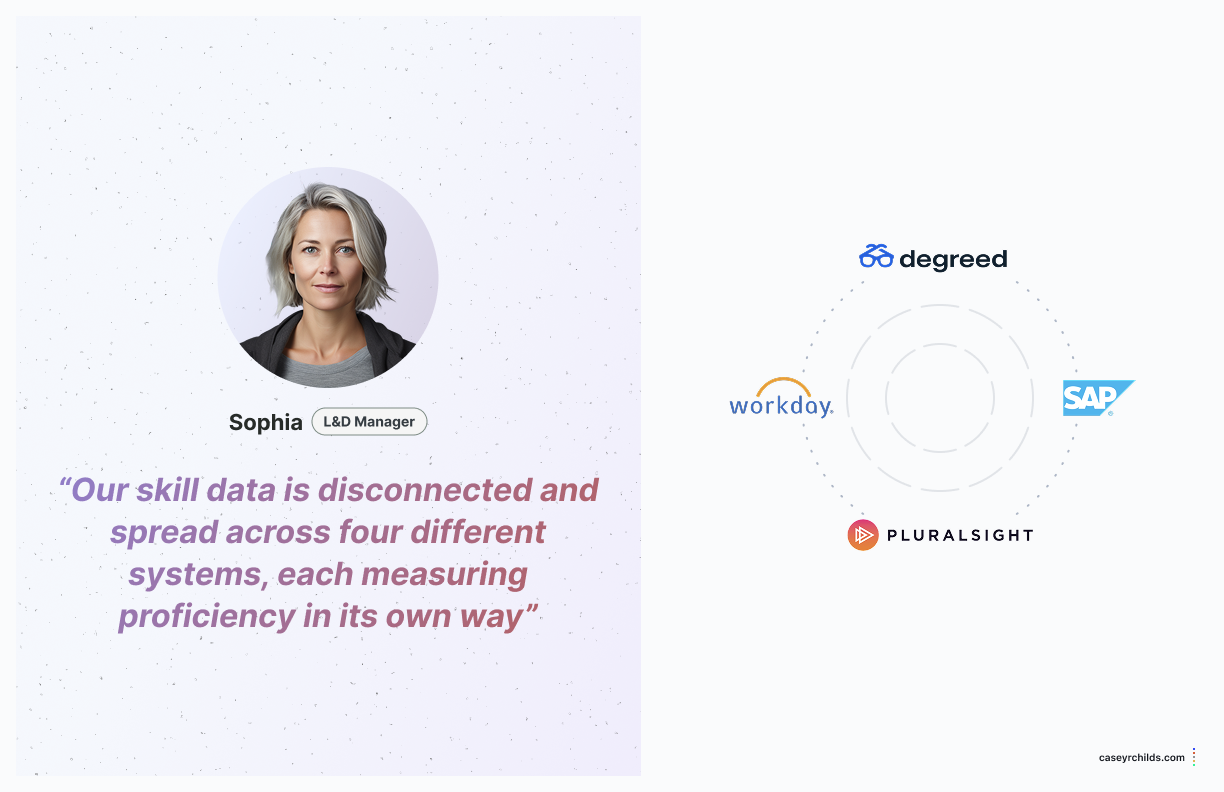
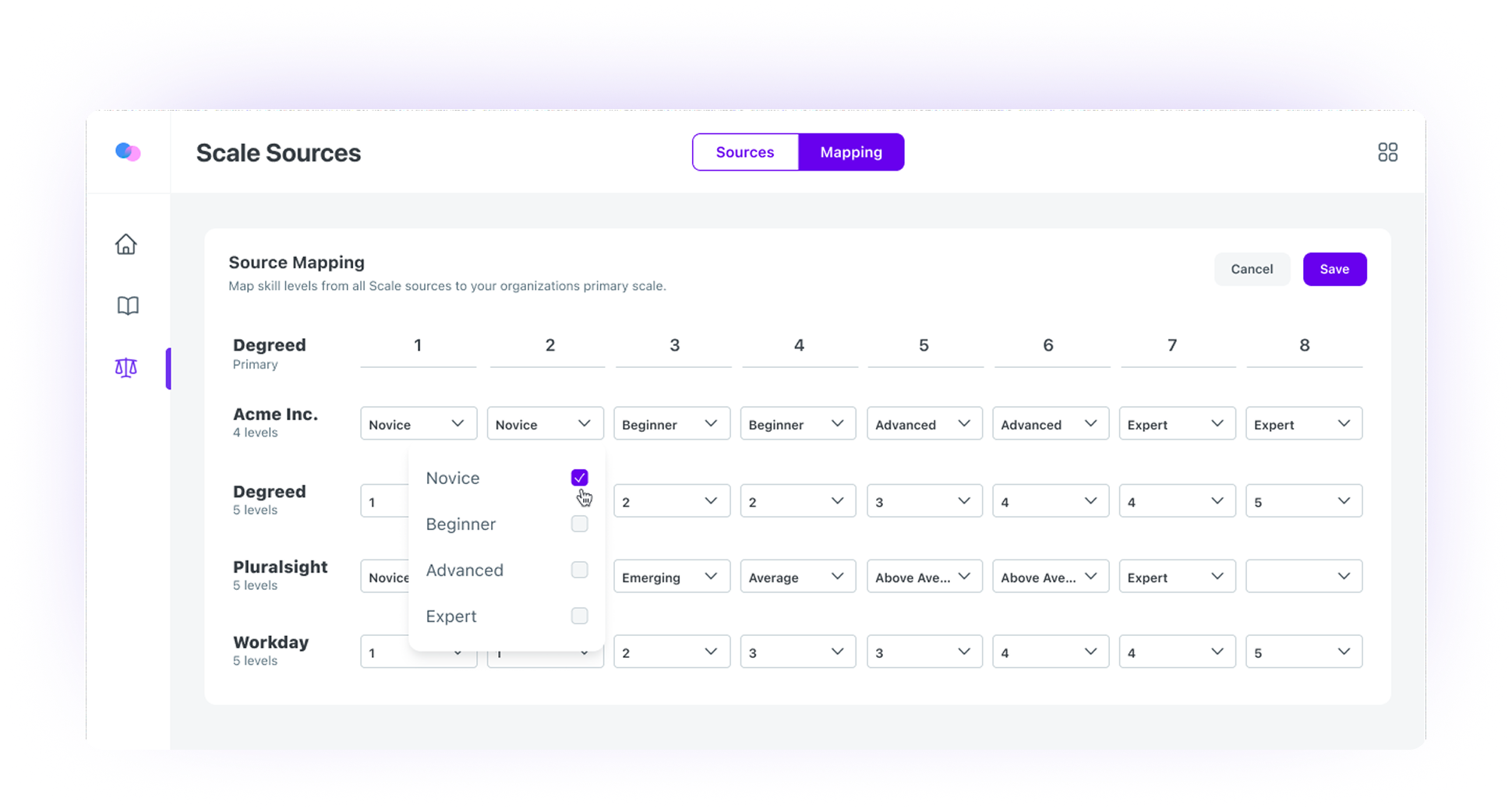
Diagram showing fragmented skill data from different enterprise systems
Different sources described proficiency in incompatible ways.

A shared language
for proficiency

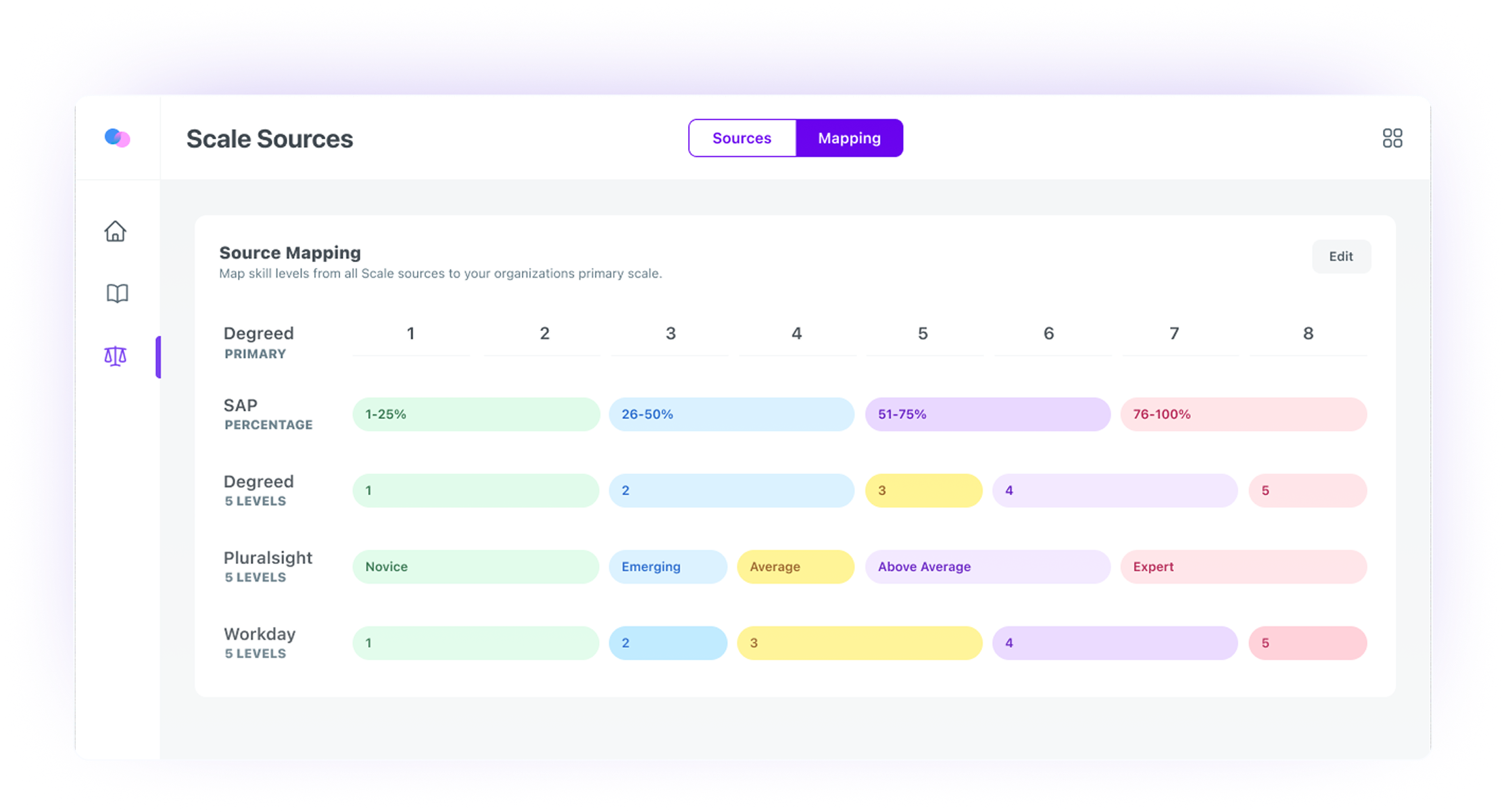
We designed a flexible system that lets companies unify employee skill ratings from multiple platforms into one consistent view. Admins can import rating sources, define how each maps to a shared scale, and generate a normalized skill level for every learner.

This replaced guesswork and manual spreadsheets with an automated framework designed for complex enterprise needs.

Interface for mapping levels between skill sourcesCompleted skill-level mapping interface

Reducing the
manual work

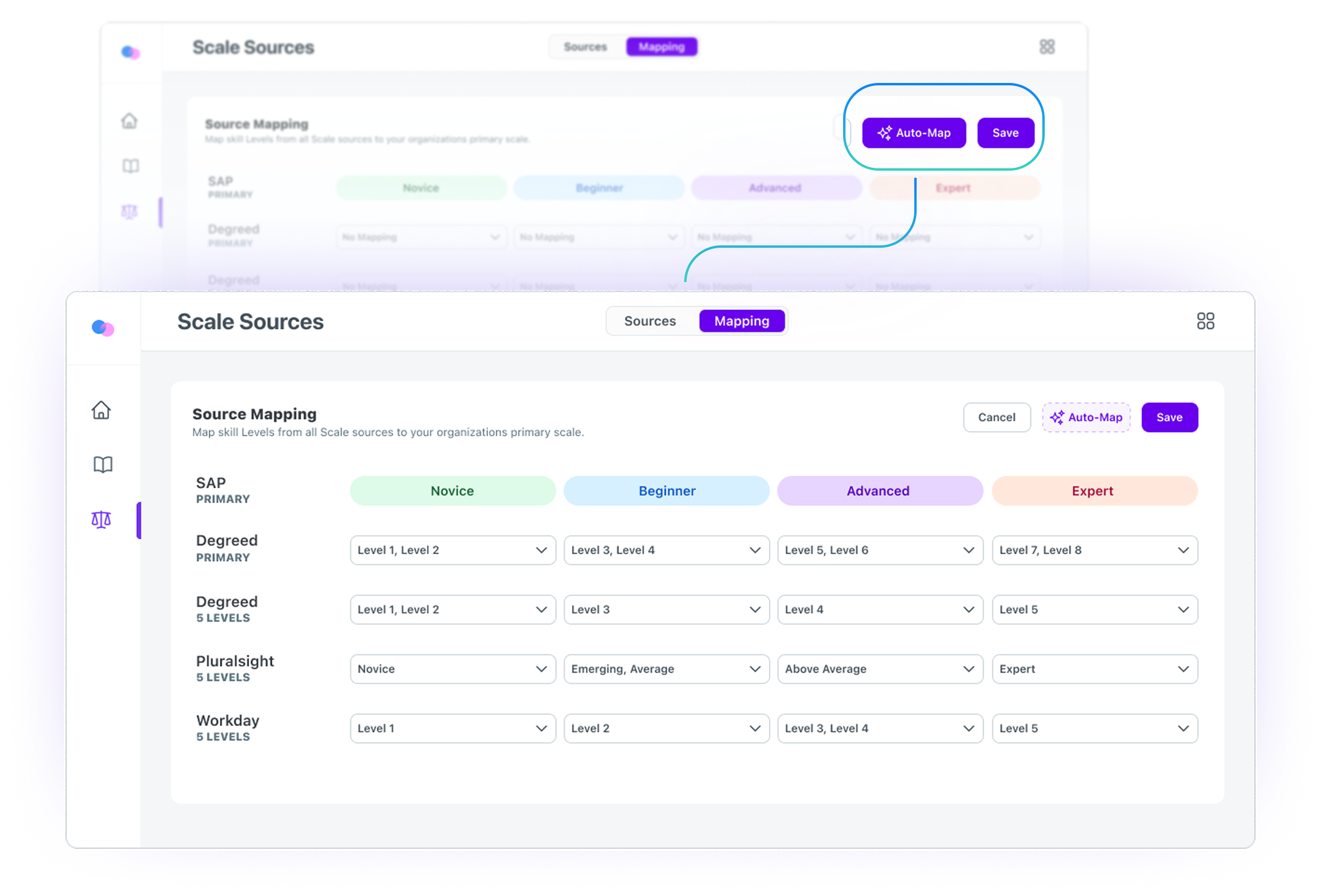
Through client interviews and feedback sessions, we learned that manually mapping every skill level was still time-consuming for admins managing large systems.

Working closely with engineering, we designed an Auto-Map feature that suggests mappings from common patterns. For most clients, those suggestions were over 95% accurate — saving hours of setup and making adoption easier.

Auto-map interface suggesting relationships between proficiency levels

Extending the
platform

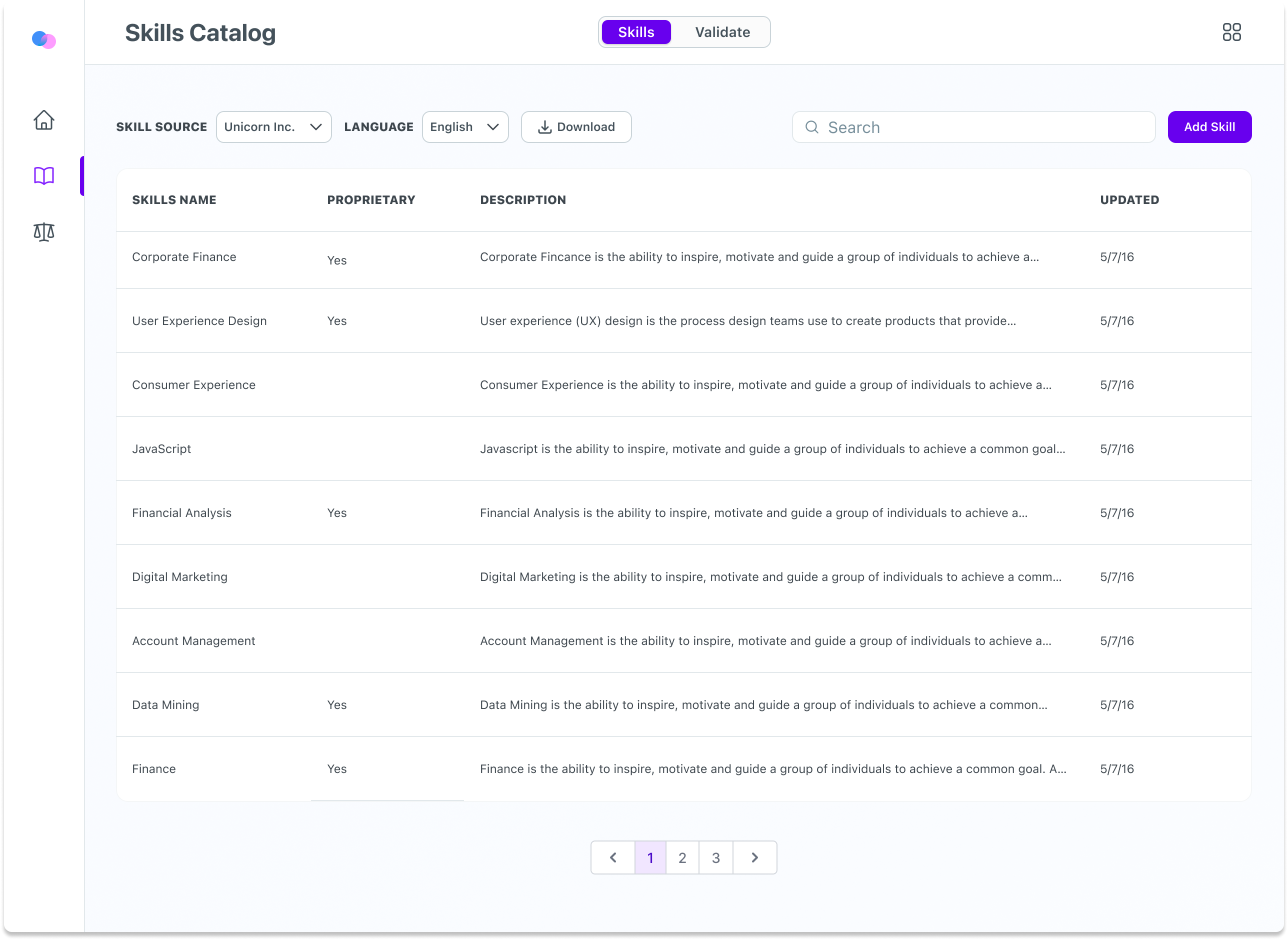
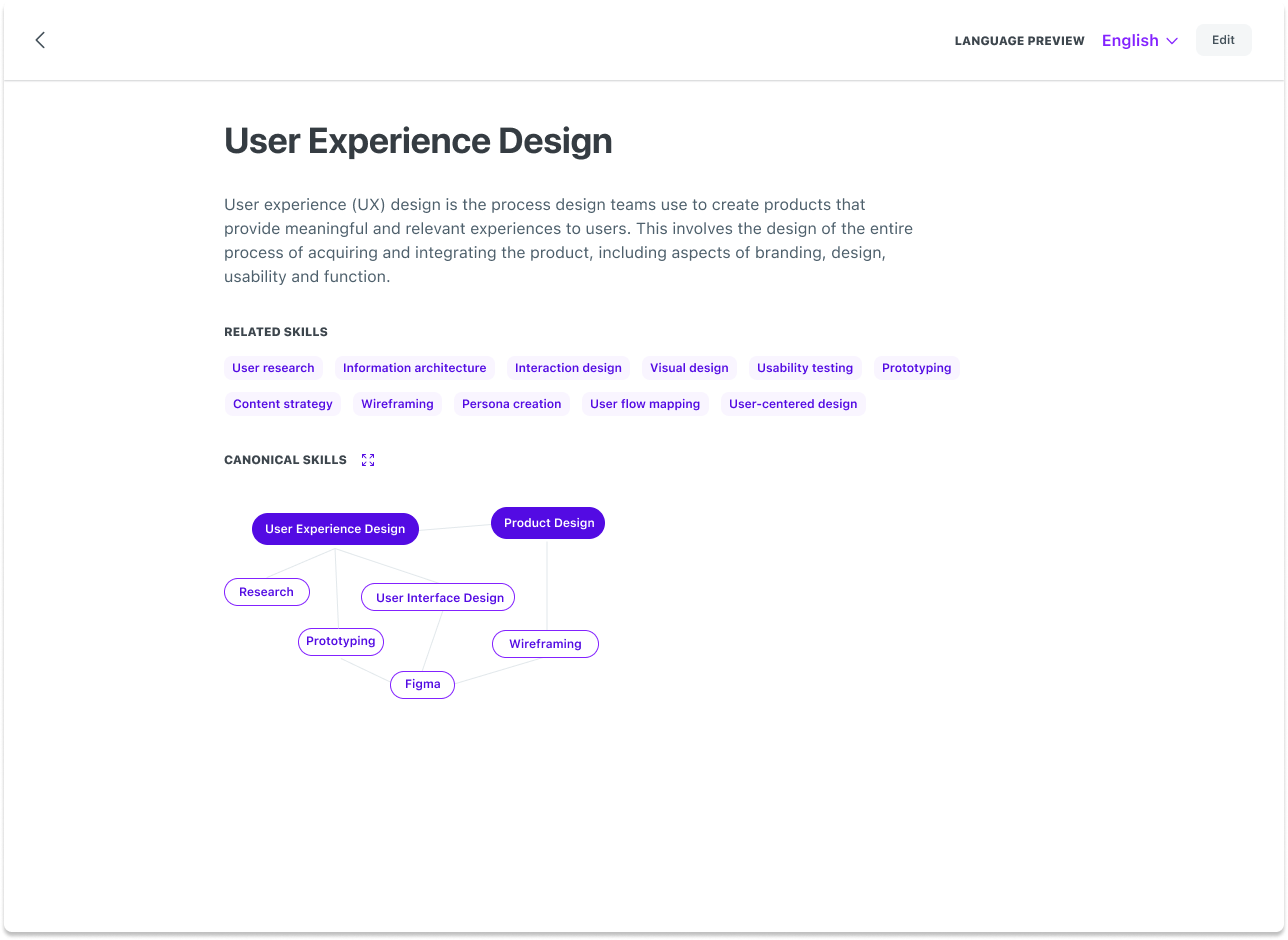
Beyond scale mapping, we created tools for admins to manage every part of their company’s skills data. They could upload taxonomies, organize frameworks by region or department, and localize skills into multiple languages.

The system became a flexible backbone for global skills data, adaptable to each company’s existing tools and structure.

Enterprise skills taxonomy management interfaceSkill detail shown in the enterprise catalog

Outcome

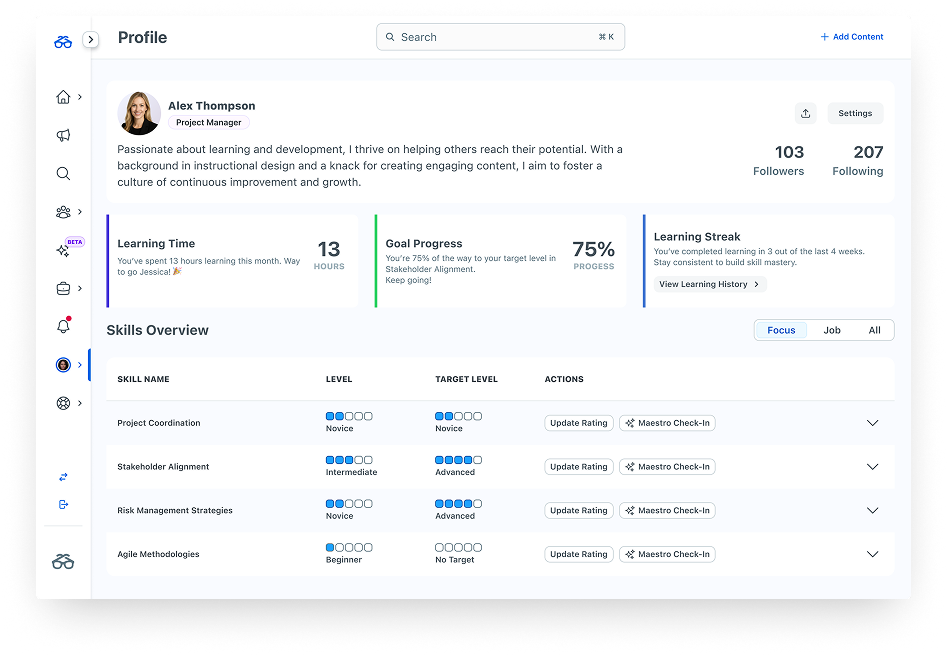
This project gave large companies a way to trust and compare skill data across messy systems — saving time for admins and removing confusion for learners and managers alike.

I led the design end-to-end with a small team of four, taking it from an abstract concept to a coded beta in under six months. We introduced a new design system and set a foundation for how Degreed handles skill ratings and enterprise integrations at scale.

Learner dashboard showing normalized skill levels

Next: creating daily
learning habits.

View case study